
Oral & Non-Oral Medication
ORAL
Oral medications are prescribed as soon as diagnosis is clarified in most clinical practices as through research is has generally been agreed that many PWP would have had their symptoms 5-10 years prior to receiving the diagnosis ad therefore would have been experiencing dopaimne depletion for much of this time. It ios foten only when the symptoms start to interfere with their lives do PWP get referred to a clinician. Oral medication regiemes Medications are the most common treatment for PWP The goal being to correct the shortage of the brain chemical dopamine which cause the parkinsons symptoms. The decision to start taking medication and which medication to take is discussed with the PWP and their cliniciacian and as the response to treatments is as individual as each PWP it may take time to get the recipe right for each personand to get teh symptoms under control. Medications will need reviewing throughout the pathway of care for each individual and as Parkinsons is a degenerative condition symptoms will continue to change along with the medications. All Parkinsons medications have potential side effects and can effect each individual very differently . Some experience very few side effects whereas others will experience many. This needs to be discussed with the prescribing clinician .
.
NON-ORAL
Non Oral therapies are used very differently throughout the world as well as the differences between each clinicician. Non oral therapies include:
Rotigotine Patch (Neupro)
Apomorphine SC injection used as a penject or continious infusion pump
Duodopa intesinal Gel used through a pump fed into the jejunum by a medically implanted tube.
Brain surgery such as Deep Brain Stimulation Pallidotomy and thalamotomy
In some countried DBS is used as first line treatment for many with Parkinsons and in other countries oral medications need to be trialled before any non oral treatments are considered. In the younger patient there are various views on how to approach treatments and as there is a higher risk of them developing side effects from oral medications which can have serious implications on their lives surgery is offered instead.
Again access to treatments vary between clinical practices and funding for apomorphine and duodopa in the UK can be complex and is often declinied and in other coutries around Europe nreither duodopa or apomorphine is available for use.
.
Madopar - (Co Beneldopa)
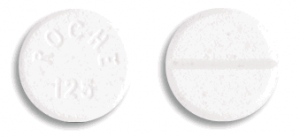
 Madopar Dispersible
Madopar Capsule
Madopar comes in both white soluble tablets which can be swallowed whole or dispersed in orange juice or water. The dosages are 62.5mg 125mg 250mg . They are often used as a rescue therapy to decrease a freeze stage and to switch some one with parkinson on from and off state to an on state. Capsules come in the same dosages but are only effective when swallowed whole. they become in effective when broken open and placed in water. These are not soluble and are longer acting than soluble treatments.
Sinemet - (Co Careldopa)
 Sinemet
Sinemet is also known as cocareldopa and is often regarded as the gold standard treatment for PWP. It is prescribed in dosages: 62.5mg 110mg 125mg 250mg. It can be taken whole or crushed and comes in instant release and Controlled release. In some clinical practices both levodopa and careldopa are often delayed in being prescribed as younger people are at higher risk of developing dyskenesias (too much movement) and early fluctuations. There is also the risk of thenm developing dopamine deregulation (DDR) the need to to take more medications than the clinician reccoemnds leading to addicition.
Entacapone - (Comtess)
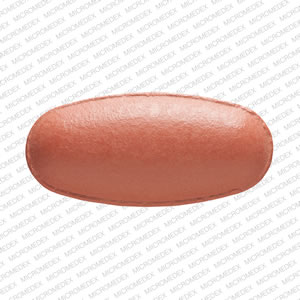
Entacapone
Nunc et vestibulum velit. Suspendisse euismod eros vel urna bibendum gravida. Phasellus et metus nec dui ornare molestie. In consequat urna sed tincidunt euismod. Praesent non pharetra arcu, at tincidunt sapien. Nullam lobortis ultricies bibendum. Duis elit leo, porta vel nisl in, ullamcorper scelerisque velit. Fusce volutpat purus dolor, vel pulvinar dui porttitor sed. Phasellus ac odio eu quam varius elementum sit amet euismod justo.
Stalevo
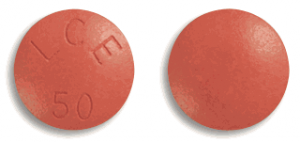
Stalevo
Nunc et vestibulum velit. Suspendisse euismod eros vel urna bibendum gravida. Phasellus et metus nec dui ornare molestie. In consequat urna sed tincidunt euismod. Praesent non pharetra arcu, at tincidunt sapien. Nullam lobortis ultricies bibendum. Duis elit leo, porta vel nisl in, ullamcorper scelerisque velit. Fusce volutpat purus dolor, vel pulvinar dui porttitor sed. Phasellus ac odio eu quam varius elementum sit amet euismod justo.
Rasagaline - (Azilect)
Rasagiline is a monoamine-oxidase B inhibitor.
Can be used alone or as adjunct to co-beneldopa or co-careldopa for ‘end-of-dose’ fluctuations
By mouth
- For Adult
1 mg daily.
Opicapone - (Ongentys)
Nunc et vestibulum velit. Suspendisse euismod eros vel urna bibendum gravida. Phasellus et metus nec dui ornare molestie. In consequat urna sed tincidunt euismod. Praesent non pharetra arcu, at tincidunt sapien. Nullam lobortis ultricies bibendum. Duis elit leo, porta vel nisl in, ullamcorper scelerisque velit. Fusce volutpat purus dolor, vel pulvinar dui porttitor sed. Phasellus ac odio eu quam varius elementum sit amet euismod justo.
Safinamide - (Xadagol)
Safinamide is a monoamine-oxidase-B inhibitor.
Parkinson’s disease, as an adjunct to levodopa alone or in combination with other antiparkinsonian drugs, for mid- to late-stage fluctuations
By mouth
- For Adult
50 mg once daily, increased if necessary to 100 mg once daily.
Pramipexole - (Mirapexin)
Nunc et vestibulum velit. Suspendisse euismod eros vel urna bibendum gravida. Phasellus et metus nec dui ornare molestie. In consequat urna sed tincidunt euismod. Praesent non pharetra arcu, at tincidunt sapien. Nullam lobortis ultricies bibendum. Duis elit leo, porta vel nisl in, ullamcorper scelerisque velit. Fusce volutpat purus dolor, vel pulvinar dui porttitor sed. Phasellus ac odio eu quam varius elementum sit amet euismod justo.
Ropinirole - (Requip IR and Requip XL)
Parkinson’s disease, either used alone or as adjunct to co-beneldopa or co-careldopa
By mouth using immediate-release medicines
- For Adult
Initially 750 micrograms daily in 3 divided doses, then increased in steps of 750 micrograms daily, dose to be increased at weekly intervals, increased to 3 mg daily in 3 divided doses, then increased in steps of 1.5–3 mg daily, adjusted according to response, dose to be increased at weekly intervals; usual dose 9–16 mg daily in 3 divided doses, higher doses may be required if used with levodopa, when administered as adjunct to levodopa, concurrent dose of levodopa may be reduced by approx. 20%, daily maximum dose to be given in 3 divided doses; maximum 24 mg per day.
By mouth using modified-release medicines
- For Adult
Initially 2 mg once daily for 1 week, then 4 mg once daily, increased in steps of 2 mg at intervals of at least 1 week, adjusted according to response, increased to up to 8 mg once daily, dose to be increased further if still no response; increased in steps of 2–4 mg at intervals of at least 2 weeks if required; maximum 24 mg per day.
Parkinson’s disease in patients transferring from ropinirole immediate-release tablets
By mouth using modified-release medicines
- For Adult
Initially ropinirole modified-release once daily substituted for total daily dose equivalent of ropinirole immediate-release tablets; if control not maintained after switching, titrate dose, consider slower titration in patients over 75 years, when administered as adjunct to levodopa, concurrent dose of levodopa may gradually be reduced by approx. 30%, if treatment interrupted for 1 day or more, consider re-initiation with immediate-release tablets.
Rotigotine Patch - (Neupro)
Monotherapy in Parkinson’s disease
By transdermal application using patches
- For Adult
Initially 2 mg/24 hours, then increased in steps of 2 mg/24 hours every week if required; maximum 8 mg/24 hours per day.
Adjunctive therapy with co-beneldopa or co-careldopa in Parkinson’s disease
By transdermal application using patches
- For Adult
Initially 4 mg/24 hours, then increased in steps of 2 mg/24 hours every week if required; maximum 16 mg/24 hours per day.
Moderate to severe restless legs syndrome
By transdermal application using patches
- For Adult
Initially 1 mg/24 hours, then increased in steps of 1 mg/24 hours every week if required; maximum 3 mg/24 hours per day.
Amantadine - (Symmetrel)
Selegeline
Is used alone or as adjunct to co-beneldopa or co-careldopa to reduce ‘end of dose’ deterioration,
Symptomatic parkinsonism
By mouth using immediate-release medicines
- For Adult
Initially 5 mg once daily for 2–4 weeks, then increased if tolerated to 10 mg daily, dose to be taken in the morning.
By mouth using oral lyophilisate
- For Adult
1.25 mg once daily, dose to be taken before breakfast.
Apomorphine
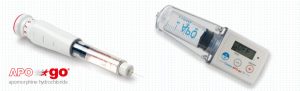
Apomorphine Pen & Pump
Refractory motor fluctuations in Parkinson’s disease (‘off’ episodes) inadequately controlled by co-beneldopa or co-careldopa or other dopaminergics (for capable and motivated patients) (under expert supervision)
By subcutaneous injection
- For Adult
Initially 1 mg, dose to be administered at the first sign of ‘off’ episode, then 2 mg after 30 minutes, dose to be given if inadequate or no response following initial dose, thereafter increase dose at minimum 40-minute intervals until satisfactory response obtained, this determines threshold dose; usual dose 3–30 mg daily in divided doses (max. per dose 10 mg), subcutaneous infusion may be preferable in those requiring division of injections into more than 10 doses; maximum 100 mg per day.
By continuous subcutaneous infusion
- For Adult
Initially 1 mg/hour, adjusted according to response, then increased in steps of up to 500 micrograms/hour, dose to be increased at intervals not more often than every 4 hours; usual dose 1–4 mg/hour, alternatively usual dose 15–60 micrograms/kg/hour, change infusion site every 12 hours and give during waking hours only (tolerance may occur unless there is a 4-hour treatment-free period at night—24-hour infusions not recommended unless severe night time symptoms); intermittent bolus doses may be needed; maximum 100 mg per day.
Levodopa/Carbidopa Intestinal Gel - (Duodopa)
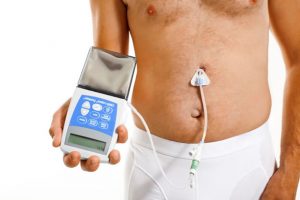
Levodopa/Carbidopa Intestinal Gel
Nunc et vestibulum velit. Suspendisse euismod eros vel urna bibendum gravida. Phasellus et metus nec dui ornare molestie. In consequat urna sed tincidunt euismod. Praesent non pharetra arcu, at tincidunt sapien. Nullam lobortis ultricies bibendum. Duis elit leo, porta vel nisl in, ullamcorper scelerisque velit. Fusce volutpat purus dolor, vel pulvinar dui porttitor sed. Phasellus ac odio eu quam varius elementum sit amet euismod justo.
Deep Brain Stimulation - (DBS)
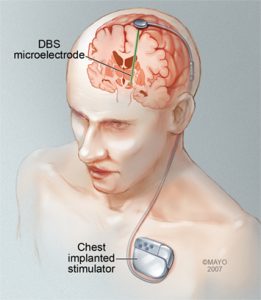
Deep brain stimulation (DBS) is a surgical procedure used to treat several disabling neurological symptoms—most commonly the debilitating motor symptoms of Parkinson’s disease (PD), such as tremor, rigidity, stiffness, slowed movement, and walking problems. The procedure is also used to treat essential tremor and dystonia. At present, the procedure is used only for individuals whose symptoms cannot be adequately controlled with medications. However, only individuals who improve to some degree after taking medication for Parkinson’s benefit from DBS. A variety of conditions may mimic PD but do not respond to medications or DBS. DBS uses a surgically implanted, battery-operated medical device called an implantable pulse generator (IPG) – similar to a heart pacemaker and approximately the size of a stopwatch to – deliver electrical stimulation to specific areas in the brain that control movement, thus blocking the abnormal nerve signals that cause PD symptoms.
Before the procedure, a neurosurgeon uses magnetic resonance imaging (MRI) or computed tomography (CT) scanning to identify and locate the exact target within the brain for surgical intervention. Some surgeons may use microelectrode recording – which involves a small wire that monitors the activity of nerve cells in the target area – to more specifically identify the precise brain area that will be stimulated. Generally, these areas are the thalamus, subthalamic nucleus, and globus pallidus. There is a low chance that placement of the stimulator may cause bleeding or infection in the brain.
The DBS system consists of three components: the lead, the extension, and the IPG. The lead (also called an electrode)—a thin, insulated wire—is inserted through a small opening in the skull and implanted in the brain. The tip of the electrode is positioned within the specific brain area.
The extension is an insulated wire that is passed under the skin of the head, neck, and shoulder, connecting the lead to the implantable pulse generator. The IPG (the “battery pack”) is the third component and is usually implanted under the skin near the collarbone. In some cases it may be implanted lower in the chest or under the skin over the abdomen.
Once the system is in place, electrical impulses are sent from the IPG up along the extension wire and the lead and into the brain. These impulses block abnormal electrical signals and alleviate PD motor symptoms
Deep Brain Stimulation